


Hey there! As a supplier of fiber termination boxes, I often get asked about the standard size of these boxes. It's a question that doesn't have a one - size - fits - all answer, so let's dive right in and explore this topic.
First off, what exactly is a fiber termination box? Well, it's a crucial component in fiber optic networks. It's used to terminate, splice, and manage fiber optic cables. Think of it as a control center for your fiber optic connections. It keeps everything organized and protected from environmental factors like dust, moisture, and physical damage.
The size of a fiber termination box can vary based on several factors. One of the main factors is the number of fiber ports it needs to accommodate. For instance, if you're dealing with a small - scale network, say a home or a small office, you might not need a box with a large number of ports. On the other hand, a big data center or a telecommunications hub will require a box that can handle a high volume of fiber connections.
Let's start with some of the common sizes for different types of applications.
Small - scale Applications
For home or small - business use, you'll often find boxes with a relatively small number of ports. A 2 - core fiber optic distribution box is a great option for these scenarios. It's compact and can easily fit into tight spaces. You can check out our Indoor/Outdoor IP65 2 Core Fiber Optic Distribution Box. This box is designed to be both indoor and outdoor - friendly, with an IP65 rating that means it's dust - tight and protected against low - pressure water jets. It's perfect for simple fiber optic setups where you only need to manage a couple of fiber connections.
The physical dimensions of a 2 - core box are usually quite small. It might be around 150mm x 120mm x 50mm. This makes it easy to install on a wall or in a small cabinet. These boxes are also lightweight, which is an added bonus when it comes to installation.
Medium - scale Applications
When you move up to medium - scale networks, like those in a medium - sized office building or a local area network, you'll need a box with more ports. A 16 - port fiber optic splitter terminal box is a popular choice here. Our 16 Port Fiber Optic Splitter Terminal Box is designed to handle multiple fiber connections efficiently.
The size of a 16 - port box is larger than a 2 - core box but still relatively manageable. It could be around 300mm x 250mm x 100mm. This extra space is needed to accommodate the splitter and all the fiber connections. The box also has proper ventilation and cable management features to ensure that the fibers are well - organized and the box doesn't overheat.
Large - scale Applications
For large - scale networks, such as those in data centers or telecommunications infrastructure, large - capacity boxes are required. A 24 - core FTTH termination box, like our 24 Core FTTH Termination Box PTE 24 U.I. For MDU, is designed to handle a high volume of fiber connections.
These boxes are much larger in size. They can be around 600mm x 400mm x 200mm or even bigger, depending on the specific design and additional features. They need to have enough space for all the fiber splicing, storage, and management. They also have robust construction to withstand the high - traffic environment of a large - scale network.
Other Factors Affecting Size
Apart from the number of ports, there are other factors that can influence the size of a fiber termination box.
Environmental Protection
If the box is going to be used outdoors or in a harsh environment, it will need to be larger to accommodate the necessary protective measures. For example, an outdoor box will have thicker walls and better sealing to protect against rain, snow, and extreme temperatures. This extra protection adds to the overall size of the box.
Cable Management
Good cable management is essential in a fiber termination box. A well - designed box will have enough space for the fiber cables to be neatly arranged, coiled, and labeled. This means that the box might be bigger than you'd expect just based on the number of ports, but it's worth it in the long run as it makes maintenance and troubleshooting much easier.

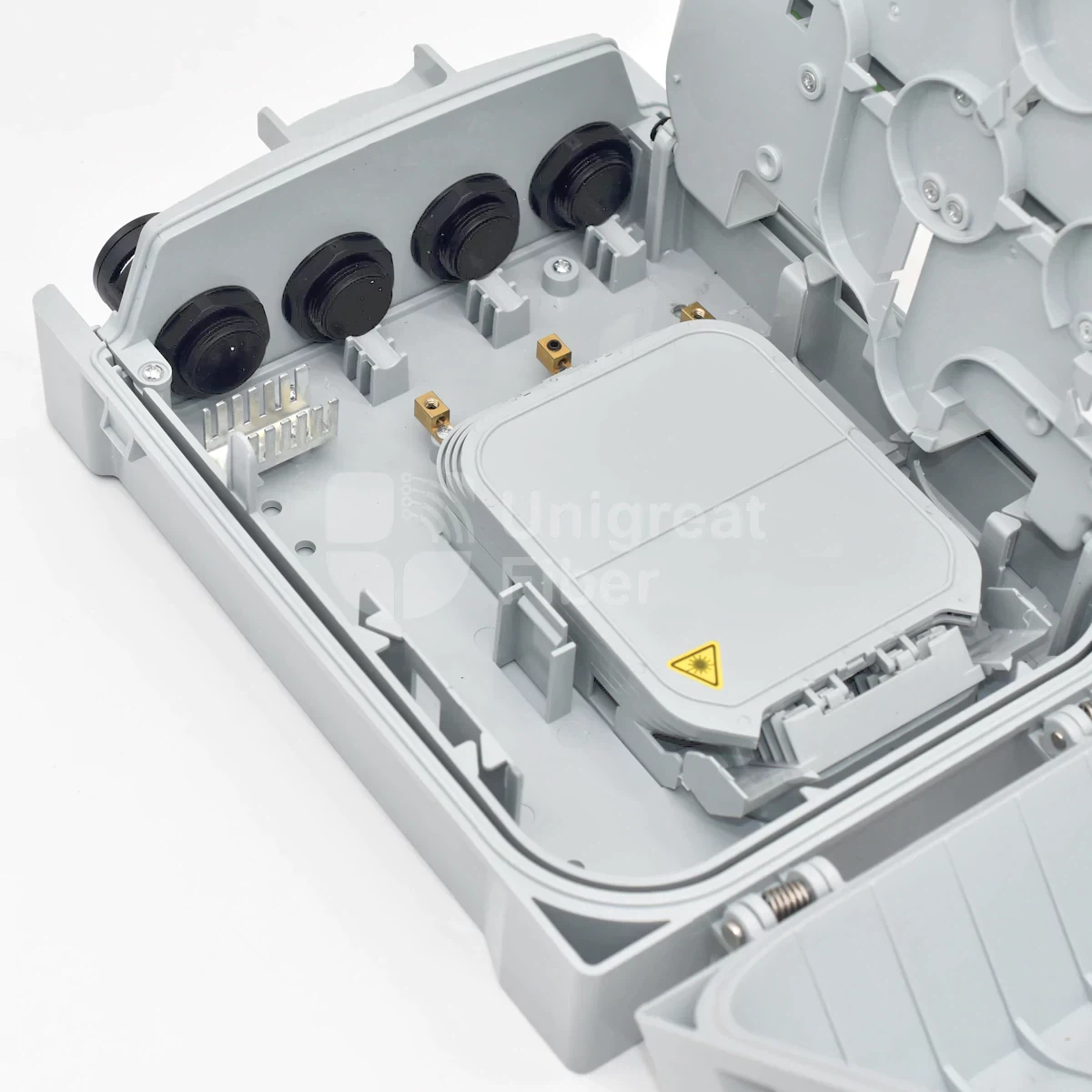
Future Expansion
It's always a good idea to plan for future expansion when choosing a fiber termination box. If you think you might need to add more fiber connections in the future, it's better to choose a slightly larger box now. This way, you won't have to replace the box when your network grows.
In conclusion, there isn't a single standard size for fiber termination boxes. The size depends on the number of ports, the application, environmental factors, cable management needs, and future expansion plans. As a supplier, we offer a wide range of sizes and types of fiber termination boxes to meet the diverse needs of our customers.
If you're in the market for a fiber termination box and need help choosing the right size for your specific requirements, don't hesitate to reach out. We're here to assist you in making the best decision for your fiber optic network. Whether you're a small - business owner looking for a simple 2 - core box or a large - scale network operator in need of a high - capacity 24 - core box, we've got you covered.
References
- Industry standards and guidelines for fiber optic network components
- Manufacturer specifications for fiber termination boxes
So, get in touch with us today to start the procurement process and take your fiber optic network to the next level!


