


In the realm of telecommunications infrastructure, the demand for reliable and high - performance cables is ever - increasing. Among the various types of cables available, the dielectric gel filled flat drop cable has emerged as a popular choice for many applications, especially in Fiber to the Home (FTTH) projects. One of the key performance aspects that users often inquire about is its waterproof performance. As a supplier of dielectric gel filled flat drop cables, I am here to delve into this topic and provide you with a comprehensive understanding.
Understanding Dielectric Gel Filled Flat Drop Cable
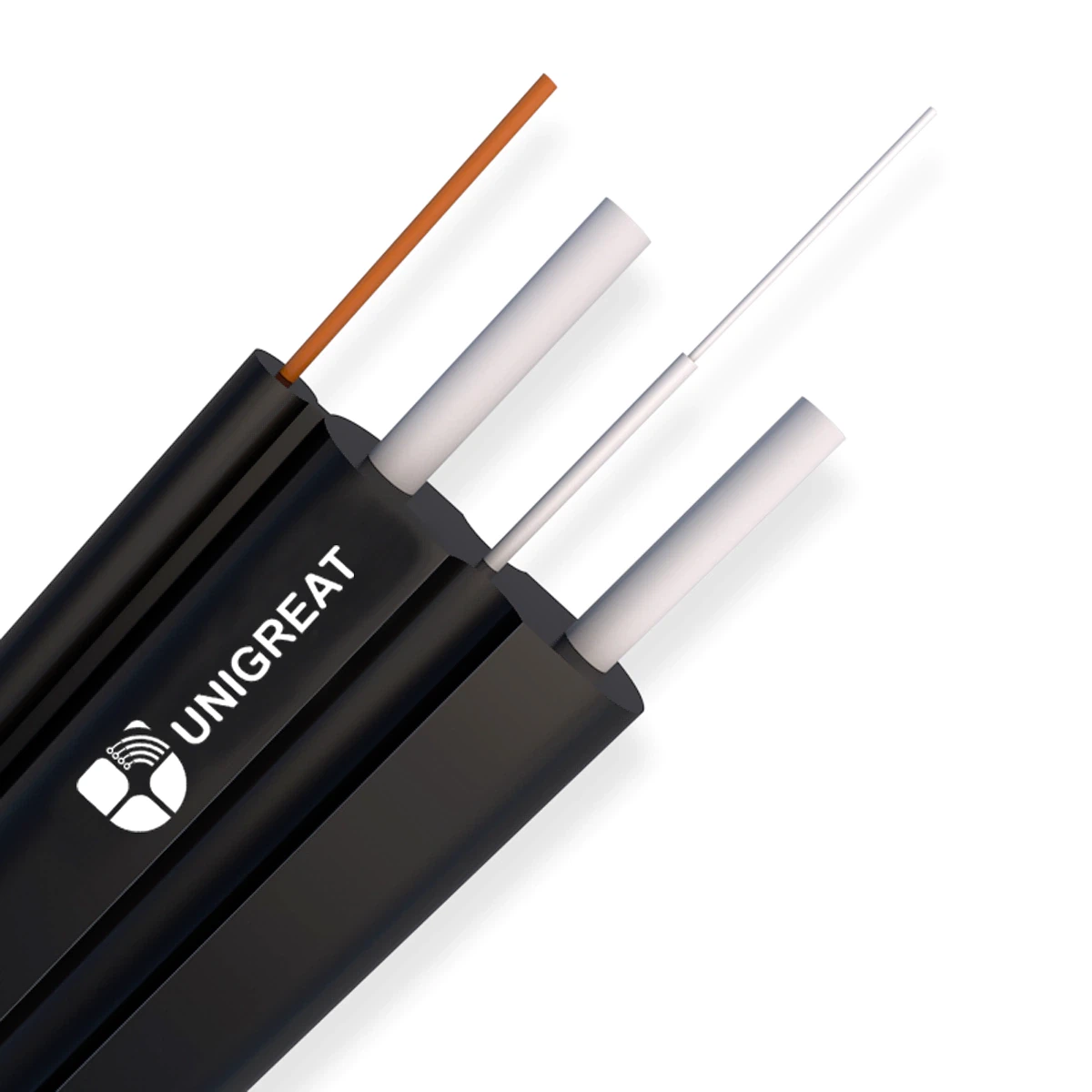
Before we discuss the waterproof performance, it's essential to understand what a dielectric gel filled flat drop cable is. This type of cable is designed to be used in the last - mile connection of the telecommunications network, bringing fiber optic connectivity directly to residential or small - business premises.
The "dielectric" nature of the cable means that it does not contain any metallic components. This is crucial in environments where there is a risk of electrical interference or lightning strikes. The flat design of the cable makes it easy to install, especially in tight spaces such as along walls or in conduits. The gel filling serves multiple purposes, one of which is related to its waterproofing capabilities.
How the Gel Contributes to Waterproofing
The gel used in dielectric gel filled flat drop cables is a specially formulated substance. It has a high viscosity and is designed to fill all the interstitial spaces within the cable. When water comes into contact with the cable, the gel acts as a physical barrier.
Firstly, the gel prevents water from penetrating further into the cable by blocking the pathways. Water molecules find it extremely difficult to move through the thick gel matrix. This is important because if water were to reach the fiber optic strands inside the cable, it could cause significant signal loss. Water can absorb and scatter light, which is the medium through which data is transmitted in fiber optic cables.
Secondly, the gel has a certain degree of adhesion to the internal components of the cable. This adhesion helps to keep the gel in place and ensures that the waterproof barrier remains intact even under mechanical stress. For example, during cable installation, when the cable may be bent or pulled, the gel will not be easily displaced, maintaining its waterproofing function.
Testing the Waterproof Performance
To ensure the quality and reliability of our dielectric gel filled flat drop cables, we conduct a series of rigorous waterproof tests. One of the common tests is the water immersion test. In this test, a sample of the cable is submerged in water for a specified period, usually several days or even weeks.
During the immersion, we monitor the cable's performance. We measure the optical attenuation of the fiber optic strands inside the cable at regular intervals. If the attenuation remains within the acceptable range, it indicates that the cable's waterproofing is effective, and the water has not caused any significant damage to the fiber optic transmission.
Another test is the water penetration test. In this test, a controlled amount of water is applied to one end of the cable, and we check if water can penetrate to the other end. If no water is detected at the other end after a certain period, it shows that the gel filling has successfully blocked the water from passing through the cable.
Comparison with Other Types of Drop Cables
It's interesting to compare the waterproof performance of dielectric gel filled flat drop cables with other types of drop cables, such as Dielectric Dry Core Flat Drop Cable and Toneable Dry Core Flat Drop Cable.
Dry core cables, as the name suggests, do not have a gel filling. Instead, they rely on other methods for waterproofing, such as using water - blocking tapes or yarns. While these methods can provide a certain level of waterproofing, they may not be as effective as the gel filling in some cases.
The gel in dielectric gel filled flat drop cables offers a more comprehensive and long - lasting waterproof solution. Water - blocking tapes and yarns may lose their effectiveness over time, especially if they are exposed to harsh environmental conditions. The gel, on the other hand, is more resistant to degradation and can maintain its waterproofing properties for a longer period.
Real - World Applications and Waterproofing Requirements
In real - world applications, the waterproof performance of dielectric gel filled flat drop cables is critical. For example, in outdoor installations, the cable may be exposed to rain, snow, and groundwater. In underground installations, the cable may be in contact with moist soil.
In coastal areas, where the air is more humid and there is a risk of saltwater spray, the waterproofing requirements are even more stringent. Saltwater can be particularly corrosive to the internal components of the cable, and the gel filling helps to protect the cable from the damaging effects of saltwater.
In addition, in areas prone to flooding, the ability of the cable to withstand water for an extended period is essential. Our dielectric gel filled flat drop cables have been successfully used in such challenging environments, providing reliable connectivity even during and after flood events.
The Role of Cable Jackets in Waterproofing
While the gel filling is a major factor in waterproofing, the cable jacket also plays an important role. The outer jacket of the dielectric gel filled flat drop cable is made of a durable and waterproof material, such as polyethylene.
The jacket provides an additional layer of protection against water ingress. It is designed to resist abrasion, which is important because any damage to the jacket could expose the internal components of the cable to water. The jacket also has UV - resistant properties, which is important for outdoor installations to prevent degradation due to sunlight exposure.
Maintenance and Long - Term Waterproofing
To ensure the long - term waterproof performance of the dielectric gel filled flat drop cables, proper maintenance is required. During installation, care should be taken to avoid damaging the cable jacket. Any cuts or punctures in the jacket can compromise the waterproofing.
Regular inspections of the installed cables are also recommended. If any signs of damage or water ingress are detected, the affected section of the cable should be repaired or replaced promptly. In addition, the cable should be installed in a way that minimizes its exposure to water sources. For example, it should be installed above ground level or in properly sealed conduits.
Conclusion
In conclusion, the waterproof performance of dielectric gel filled flat drop cables is a result of the combined effects of the gel filling, the cable jacket, and the overall cable design. The gel filling acts as a primary waterproof barrier, preventing water from reaching the fiber optic strands and causing signal loss. The cable jacket provides an additional layer of protection and durability.
Our company, as a supplier of dielectric gel filled flat drop cables, is committed to providing high - quality products with excellent waterproof performance. We have a strict quality control system in place to ensure that every cable meets the highest standards.
If you are in the market for reliable and waterproof drop cables for your telecommunications projects, whether it's for residential or commercial applications, we invite you to ROC Drop Cable – Toneable & Dielectric Flat Drop Cables. We are more than happy to discuss your specific requirements and provide you with detailed product information. Contact us today to start a procurement discussion and find the best cable solutions for your needs.

References
- Telecommunications Industry Association (TIA) standards on fiber optic cable performance.
- Research papers on the properties of gel materials used in cable waterproofing.
- Internal test reports from our company's quality control department.


